About the Contributor
This story was written by George Harb, shared as part of The Impactful Voice Project™ — One Voice. Infinite Impact.™
George Harb is a Dual Elite Neuroencoding Specialist and Peak Performance Coach who helps successful men reprogram the beliefs and emotional patterns shaping their identity. His work blends neuroscience, psychology, and lived experience to support men rising into resilience, clarity, and authentic strength.
🔸 Category: Personal
🔸 Country: Australia
🔸 Connect: https://empower-u-coaching.com/

KEY TAKEAWAYS
- Many men silently carry emotional pressure while appearing strong and composed on the outside.
- Transformation begins with honesty — the moment someone admits the quiet truth they’ve been avoiding.
- Identity is not fixed; the mind can be retrained, recoded, and reshaped through awareness and intentional change.
- Reclaiming self requires challenging inherited beliefs about masculinity and redefining strength as connection, not silence.
- Personal healing can become a pathway to helping others, creating cultural change and emotional safety for men.

“I don’t want to keep surviving my own life.”
Every day in Australia, three out of four people who die by suicide are men. It’s the leading cause of death for men between 15 and 44. And yet, most of these men looked like they were “doing fine.” Good jobs, good families, good reputations. Men who were praised for being reliable, steady, composed. Men who had mastered the art of holding everything together, especially the parts that were quietly falling apart.
For years, I was one of those men.
On the outside, I was admired. Steady. High-performing. The kind of man people trusted in a crisis because I never seemed rattled. I had spent nearly two decades leading teams, delivering results, and meeting expectations. I looked like someone who was exactly where he was meant to be.
But inside, there was a different story unfolding, one I didn’t know how to tell, even to myself.
I remember a boardroom meeting, long before I ever found the language for what I was feeling. Around the table, everyone was discussing strategy, next steps, deadlines. I contributed, nodded, tracked the conversation. But under the surface, my mind was racing. Not with ideas or solutions, just noise. A quiet, relentless pressure. A sense of holding my breath without knowing how to exhale.
I had become very good at performing composure.
What I didn’t realise then was how many men live that same double life: the external role and the internal reality. The success that looks stable but feels fragile. The career that brings status but slowly erodes identity. The weight of expectations carried silently, because silence seems easier than vulnerability.
My moment of truth didn’t arrive in a dramatic collapse. It came quietly, late one night, long after everyone else had gone home. I was sitting alone, lights off, the house still. And for the first time in my life, the pressure I’d been carrying felt too heavy to ignore.
As I sat there, in the kind of silence you can feel in your bones, a thought surfaced, simple but completely honest. I whispered it out loud, almost to check if it was real.
“I don’t want to keep surviving my own life.”
Not ending it. Not escaping it. Just… surviving it.
Surviving your own life is the feeling of moving through your days without being in them. It’s when achievement stops feeling like fulfilment and starts feeling like armour. It’s when you realise people admire a version of you that isn’t actually you. And it’s when you finally see that something has to change, not externally, but internally.
That moment didn’t magically transform me. But it interrupted the pattern long enough for something new to enter – honesty. And honesty, I would learn, is the quiet beginning of all real change.
In the months that followed, I began exploring something I had previously overlooked, my mind. Not in a conceptual way, but in a real, practical, human

way. I learned that the brain is not a fixed library of old stories; it’s a living laboratory that rewrites itself through repetition, emotion, and identity. I discovered that the beliefs I carried weren’t truths, they were rehearsed patterns. Patterns learned early, repeated often, and silently accepted as “just who I am.”
This realisation ignited a shift in me. Because if identity is shaped, it can also be reshaped. If the mind is trained, it can be retrained.
But transformation rarely happens neatly. It’s not a straight line, it’s a series of small, sometimes uncomfortable steps.
For me, the first step was recognising the old story I had been repeating for decades: Be strong. Be reliable. Don’t burden anyone. Don’t need anything. Don’t feel too much.
A story passed down through generations of men who were taught that strength meant silence.
Rewriting that story required three shifts, ones I didn’t yet have names for, but which would eventually become the foundation of my work.
The first shift was what I now call Recode, challenging the beliefs that quietly dictate your life. I started noticing the moments when I shrank myself, when I avoided being fully seen, when I worried that if people really knew me, they might see someone uncertain or unworthy. Those beliefs weren’t facts; they were outdated codes running the system. The more I examined them, the more they loosened their hold.
The second shift was Rise, learning to act from a place of alignment rather than fear. I remember the first time I expressed a boundary that I would have previously swallowed. It wasn’t dramatic. I simply said what I meant, respectfully and clearly. And the world didn’t collapse. No one was disappointed. In fact, I felt a quiet steadiness I hadn’t felt in years. Rising isn’t about volume, it’s about truth.
The third shift was Reclaim, stepping back into my identity, not the version shaped by expectations, but the one that felt like home. For me, reclaiming began in the smallest moments: choosing rest without guilt. Letting people see my humanity, not just my competence. Making decisions based on what was aligned, not what was impressive. Slowly, I stopped performing my life and started living it.
As I changed, something else started to happen. Men around me, friends, colleagues, clients, began to share their own quiet struggles. Not publicly, not dramatically, but privately, in conversations that began with a sentence I knew too well:
“I don’t know who to talk to about this.”
It became clear that my story wasn’t an exception. It was a mirror.
Behind the titles, the achievements, the expectations, men everywhere were carrying emotional weight without the tools, or permission, to name it. And the cost of that silence was staggering: strained relationships, burnout, anxiety, hidden shame, and in too many cases, lives cut short.
My personal transformation became inseparable from a larger purpose: helping men rewrite their internal stories before those stories consume them. Not through pressure, but through presence. Not through perfection, but through honesty. Not by becoming someone new, but by remembering who they were before the world taught them to disconnect from themselves.
Today, the work I do is not just coaching, it is cultural repair. It is redefining strength for the modern man. It is giving language to experiences many men have never spoken aloud. It is teaching them how the mind works so they can finally work with themselves instead of against themselves. And it is building a movement where men can be resilient not because they endure everything alone, but because they are connected, to themselves, to others, and to a truth deeper than performance.
When I look back at that night, sitting alone in the quiet, I no longer see a breaking point. I see a beginning. A moment when survival turned into awareness. When silence turned into honesty. When a story I had lived for years finally made space for a new one.
I share this not because my journey is unique, but because it isn’t.
Every man has a moment that asks for his honesty.
Every man carries a story beneath the one he shows the world.
And every man, no matter how far he has drifted from himself, can find his way back.
Sometimes it begins with a whisper.
Sometimes it begins with a question.
Sometimes it begins with a decision to stop surviving, and start remembering who you are.
#mensmentalhealth #livedexperience #masculinityredefined #personalgrowthstory #neuroencoding #healingjourney #emotionalresilience #aussiementalhealth #mentalhealthmatters #theimpactfulvoiceproject
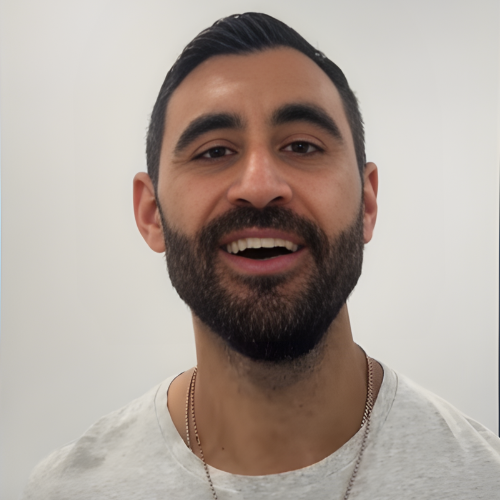
George Harb is a Dual Elite Neuroencoding Specialist, Peak Performance Coach, and founder of EmpowerU Coaching. After two decades leading high-performing teams, he now helps successful men reprogram the beliefs, emotions, and patterns shaping their identity. His work blends neuroscience, psychology, and lived experience to guide men out of silent struggle and into grounded confidence, clarity, and purpose. Driven to redefine modern masculinity, George is building a movement that supports men to rise with emotional resilience and authentic strength, in their careers, relationships, and lives.
If this story resonated with you, please share it. You never know who might need it today.