About the Contributor
This story was written by Rose Davidson, shared as part of The Impactful Voice Project™ — One Voice. Infinite Impact.™
Rose Davidson is an Australian lived-experience storyteller and Voice & Story Mentor who has spent her life transforming silence into strength. As Founder of The Impactful Voice Project™, she helps others turn their own lived experiences into stories that heal, connect, and create change.
🔸 Category: Personal
🔸 Country: Australia
🔸 Connect: [email protected]
Warning
This story contains references to childhood sexual abuse, domestic and family violence, emotional coercion, and the long-term impacts of trauma.
The experiences are shared in a non-graphic way, but some readers may find the themes confronting.
Please take care of yourself as you read.
You are encouraged to pause, step away, or seek support if needed.
“I decided to tell my story after seeing a news report about a childcare worker in Queensland who abused children for nearly two decades, even after multiple reports to police. I felt a deep need to reach out to those families – to let them know that while the damage is real, survival is possible. My story is proof that even after the worst kind of harm, life can continue, rebuild, and transform.”
KEY POINTS
- Abuse carried in silence can shape an entire childhood — and adulthood — when no one steps in to protect a child.
- Betrayal by caregivers often causes deeper wounds than the harm itself, leaving lifelong impacts on trust, identity, and relationships.
- Early trauma can lead to patterns of seeking love, safety, and belonging in unsafe places.
- Healing is not linear — but reclaiming one’s story restores power, dignity, and voice.
- Speaking out breaks generational silence and reminds others they are not alone.
How I Learned to Survive What No Child Should Carry
I grew up in a house where fear walked ahead of my father. He was a man whose temper arrived faster than affection, and most of my memories of him come with the sting of discipline rather than the warmth of love. A wrong answer, a misunderstood task, or simply being in the way could earn a slap that left a mark. As a child, you learn not to expect tenderness, so when rare moments of kindness appear, a gift, a gesture, a smile, you convince yourself this must be what love feels like.
For a time, I believed that.
The shift began slowly, disguised as attention I thought I had earned. Little things at first, presents, favours, new clothes, and then a Christmas gift that, in hindsight, marked the beginning of a dangerous change. I didn’t understand what was happening or how to interpret affection that came with conditions I had no language for. What began as closeness soon crossed boundaries no parent should ever cross, leaving me caught between confusion and dread. I was told, “All fathers do this with their daughters”, and “I must keep it a secret until I turned 16.”
By the time my family travelled to Germany in June 1972, I had learned that silence was expected of me. I slept beside my father in a shared loft at one of the places we visited, pretending to be asleep,
pretending not to understand, pretending everything was normal. In public, I was expected to be the perfect daughter, well behaved, graceful, “ladylike.” The disconnect between how we appeared and what I carried inside slowly hollowed me out.
When we later travelled through Hawaii and Fiji on our way to Australia in September 1972, I finally understood I didn’t want any part of what he demanded. My refusals brought anger. My avoidance brought punishment. But even then, I didn’t yet have the words for the truth. I was a child trying to survive a world built entirely around someone else’s desires.
We arrived in Australia, I was twelve. Before long, the boundaries my father crossed escalated in ways no child should ever endure. I learned to dissociate, to leave my body while staying physically present, because there was no escape, no protection, and no parent willing to intervene.
My mother knew something was wrong. I told her. Once, she took me to the police. Once, I spoke my truth. Then, when my father survived a life-threatening accident, she took me back and made me retract everything. That betrayal was its own kind of violence, a message that my safety was negotiable, my voice inconsequential, and my pain less important than keeping the family intact.
The anger in me began to grow.
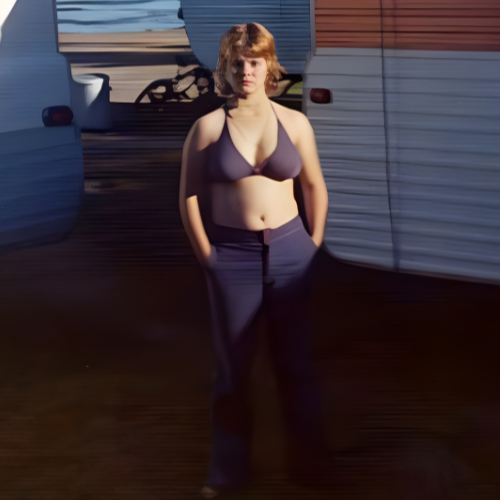
I sought connection wherever I could find it. I gravitated toward boys who gave me even a moment of attention. I confused intimacy with affection because my childhood had taught me the two were inseparable. I found myself in relationships far beyond my maturity, still believing this was the only way to be wanted, to be seen.
At fourteen, I ran away with a man I believed cared for me, Patrick, the first person who made me feel chosen. When the police found us, I told a young constable everything. He believed me. It was the first time an adult had listened without doubt. For a moment, I felt hope.
But once again, the system failed me. I was placed in a remand centre “for protection,” while my father was held on remand and my mother reassured the court she could “look after me.” I was released back into the same unsafe home, and my story was swallowed by the quiet expectations of a community unwilling to see what was in front of them.
By fifteen, I was in court, terrified, asked to recount experiences no teenager should have to articulate. Despite diaries documenting the truth, I could speak only of one incident. Trauma makes words disappear. Fear makes the body freeze. I survived that day by shutting down the parts of myself that still felt like a child.
Life became a pattern of upheaval, new towns, new schools, new attempts at safety, until eventually I found myself back in the Blue Mountains at sixteen, chasing the idea of love and hoping Patrick still wanted me. He didn’t. I stayed anyway, clinging to the hope of belonging. I got a job. I learned to survive alone. No one taught me how to be a young woman in the world, not how to shop, not how to eat, not how to take care of myself. I figured it out piece by piece, the same way I had learned everything else, through necessity.
Eventually, Patrick’s employer took pity on me. He drove me to the airport and sent me back to Tasmania, back to a family living in a broken-down country house with tank water and more neglect than stability. That is where I met Philip, a boy so gentle and charming that he took my breath away. We spent four years together and even got engaged. For a moment, I thought I had found something safe and real. But that ended in betrayal too, and once again I learned how quickly love could be taken away.
Somewhere in those years, after serving five years in prison for what he did to me, my father came back into my life. And I let him. I still don’t fully understand why. Maybe it was obligation, conditioning, or the remnants of a bond I never chose. Maybe I believed forgiveness was expected of me. Maybe I just didn’t know how to stop being the child who was taught to accommodate him. Whatever the reason, I carried guilt that never belonged to me.
Across my adulthood, I have been engaged three times, married twice, and raised three children who are now in their thirties. I am a grandmother. I have lived a life, built a life, and rebuilt myself more times than I can count. And yet, when I look back, I see a girl who walked through every chapter without a single adult standing between her and harm. Not one protected me. Not one stayed. Every survival skill I have, I taught myself, sometimes too early, sometimes the hard way, but always alone.
Today, I live with the long-term impacts of those years: bipolar disorder, C-PTSD, emotional dysregulation, and chronic depression. These are the echoes of a childhood shaped by fear, betrayal, and survival. But they are not the sum of who I am.
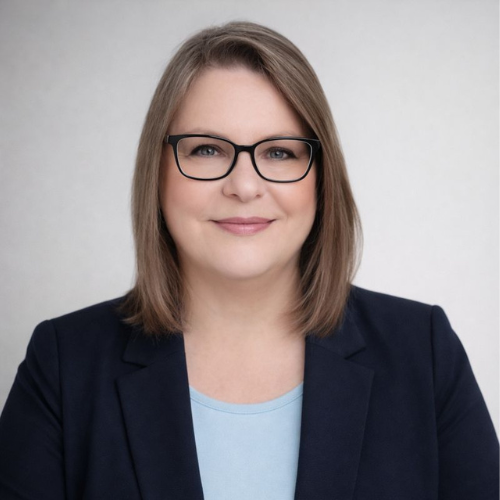
Because despite everything, I have always had a big heart. I have always tried to be kind. I have always strived to become someone better than the life I was handed. And I am still trying, every day, to be all that I can be.
I share this story not because it is easy, but because silence breeds more silence. And because there are others who grew up like I did, children who learned to make themselves small, who were never taught to expect safety, who carried secrets to protect the very people who harmed them.
To them I say:
You are not to blame. You were never the problem. You deserved safety, love, and protection.
And you still do.
My story is not about what was done to me. It is about what I chose to become in spite of it.
A woman who speaks.
A woman who stands.
A woman who refuses to let silence win.
That is why I advocate for domestic violence survivors and childhood abuse survivors.
No one should be left without a voice.
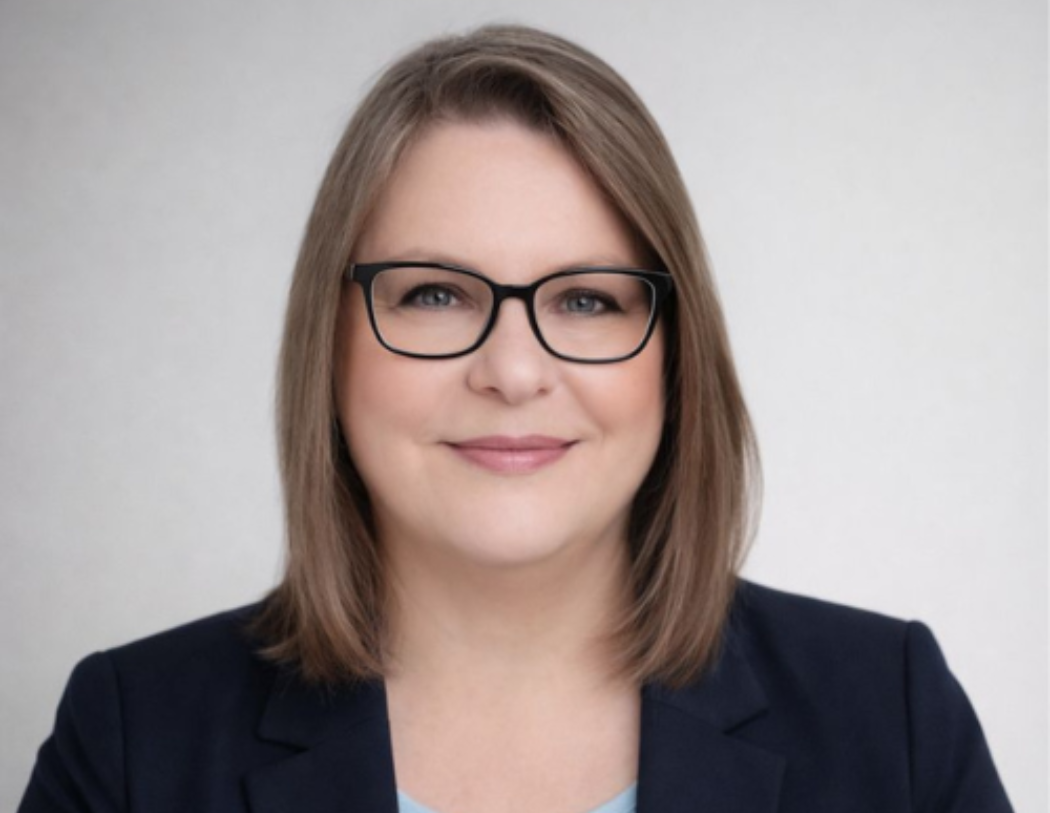
Rose Davidson is a Voice and Story Mentor and founder of The Impactful Voice Project™, a global movement helping people turn lived experience into impact. She guides coaches, entrepreneurs, and purpose driven professionals to share their stories with clarity, confidence, and authority. An award winning indie podcaster and creator of the OPAL System©, Rose blends storytelling expertise with practical guidance to help people use their voice with purpose. Through The Impactful Voice Project™ and Healing Through Love, she champions survivor empowerment and meaningful, real world connection.
“My story is not about what was done to me — it is about what I chose to become in spite of it.”
If this story resonated with you, please share it. You never know who might need it today.
#LivedExperience #SurvivorStory #ChildhoodTrauma #BreakingTheSilence #GenerationalHealing #ResilienceInAction #VoiceAndPower #SurvivorStrength #HealingJourney #IVPStories


