About the Contributor
This story was written by Tracey Rowland, shared as part of The Impactful Voice Project™ — One Voice. Infinite Impact.™
Tracey is a personal transformation author whose work explores how our thoughts and feelings shape who we are and how we move through the world. She helps people recognise unhelpful patterns, reclaim their inner narrative, and step into a more aligned, intentional life.
🔸 Category: Entrepreneur
🔸 Country: New Zealand
🔸 Connect: https://www.traceyrowland.com/

Key Takeaways
We all carry unconscious narratives from our past, and without realising it, those stories shape how we interpret questions, conversations, and conflict.
Triggers often come from old experiences, not the present moment. What seems like irritation or defensiveness is often fear or protection learned long ago.
Partners can be having completely different conversations internally, each assuming the other has negative intentions, even when both are trying to connect.
Understanding the story beneath the reaction can break long-standing cycles. Once Tracey and her husband recognised why they were reacting the way they were, the conflict pattern dissolved.
Healing starts with awareness. Naming the story, understanding its origins, and talking openly after the moment—not during—creates space for change.
My friend, who was born into a violent family, talked to me about some of the overtones in her marriage and her struggles with her partner. She never liked her husband to ask her questions out of context. It took her a long time to understand why. To the observer, it would seem that when asked any question, she was defensive and obstructive. A simple ‘Do you think it is going to rain?’ would cause a barrage of questions from her: ‘Why do you want to know? Are you planning on going out?’ and so on. The husband was just asking for the point of conversation, but to my friend, questions were always loaded. Growing up in a violent household meant the wrong answer to any question could have very serious outcomes. My friend was triggered into nervousness by the out-of-context questioning, and her husband was triggered himself by never getting a straight answer. Any question from him was followed immediately by a barrage of questions from her. Inevitably, they would get into a circular argument about why there were no straight answers and why one could not ask a question. Neither of them knew this at the time. He assumed she was being difficult and obstructive, and she assumed he had ulterior motives to his questioning.
My husband doesn’t like questions either. But his story is different. If I ask him about where he is going, or why he is intending to build a fence in a particular way, he views my enquiry as an attack on his ability to deliver on the expectation or his competence to complete a task. For me, I just want to know what time he will be back for dinner and how much planting room there will be for my tomatoes up against the fence. For him, it means that I doubt his ability and skills and don’t believe he can build the fence the way it should be.
Keep in mind that none of us know these are our stories unless we actively try to uncover them. Trying to stop mid-argument and civilly discuss what is really happening is unlikely (#virtuallyimpossible). Your best bet is to discuss what is actually happening after the argument is over and you’ve both had time to cool down. My husband and I used to get into

a full-blown argument every time we tried to do gardening or home improvement. I would say to him, ‘You do this every time; you hate me asking any questions’. He would profess that he didn’t, and we would get into an argument about that as well. I felt that he did not value my opinion, and I was worried that I wouldn’t get the fence the way I wanted it because he wouldn’t listen to me.
We did this for nearly 20 years.
Twenty
Years.
This issue doesn’t arise for us anymore because we finally got to the bottom of what we were hearing versus what we were thinking. Not only were we making assumptions about the other person’s reason for the argument, we were also hearing things that had not occurred in that instant.
#LivedExperience #RelationshipInsights #UnderstandingTriggers #HealingJourneys #CommunicationMatters #EmotionalAwareness #BreakingCycles #MarriageDynamics #TraumaInformed #PersonalGrowth
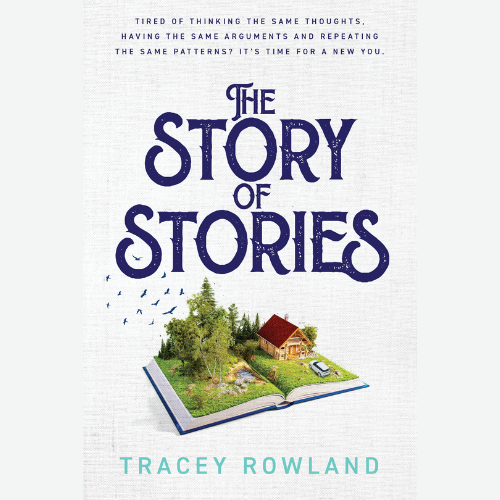
Tracey is a personal transformation author and has provided this excerpt from her first book, The Story of Stories. Tracey strives to educate people on the narrative of what you think matters … and not just for a manifestation mindset.
Thoughts and feelings create who you are and how you act in the world. You may in fact, be acting in opposition to who you want to be. Unlocking this knowledge and getting off the unhelpful carousel offers a vastly different experience of the world… and your life within it. Tracey provides a seat to drive your own life.
If this story resonated with you, please share it. You never know who might need it today.