
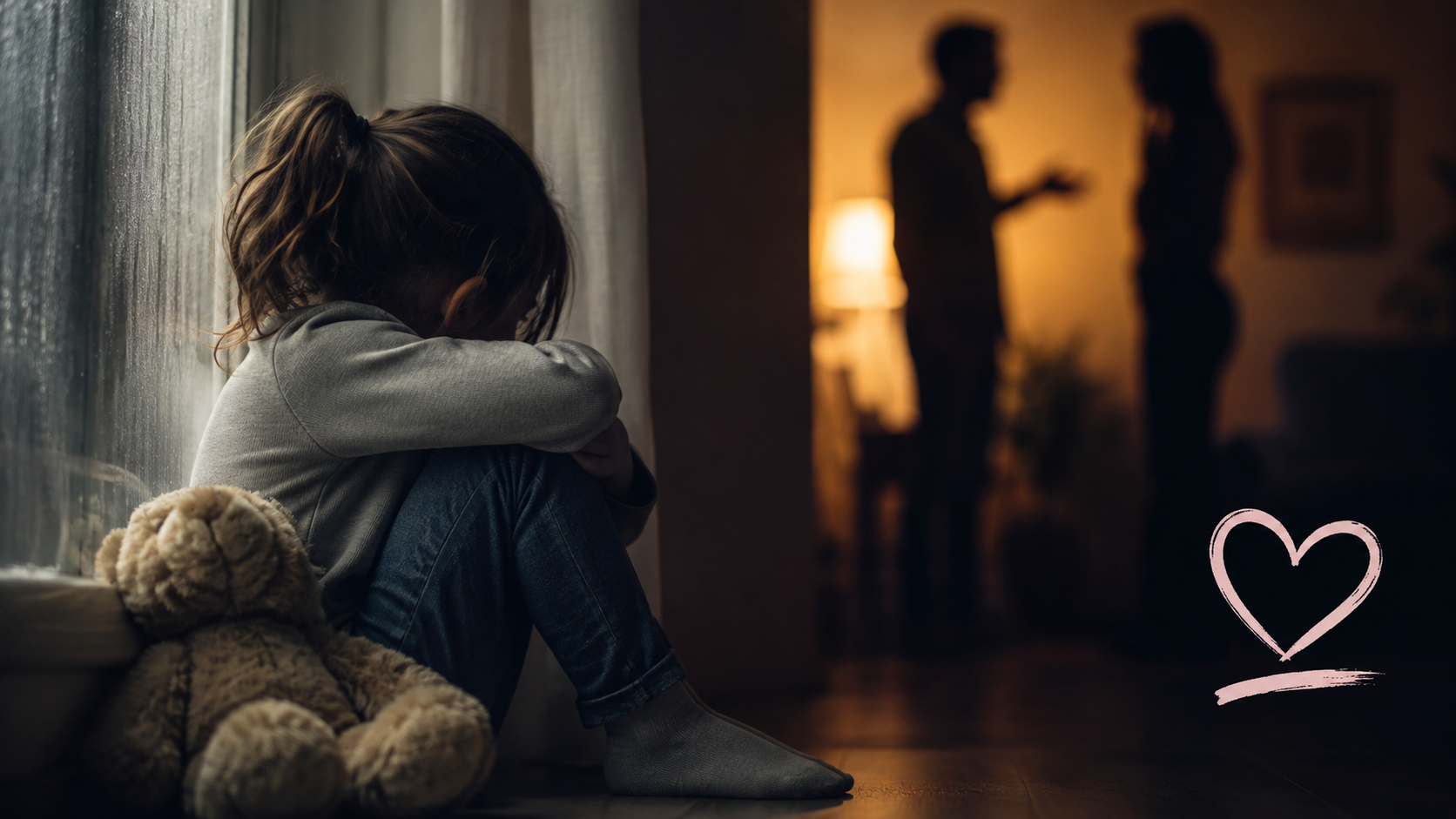
Content note: This article discusses children’s responses to domestic and family violence.
This follows on from the previous article ‘Children Do Not Just Witness Domestic Violence’
Support
If you or someone you know is experiencing domestic, family or sexual violence, contact 1800RESPECT
on 1800 737 732, text 0458 737 732 or use its online services. If there is immediate danger, call 000.
Kids Helpline provides free, private and confidential support for young people aged 5 to 25 on 1800 55 1800.
A child throws a chair in the classroom. Another refuses to speak. One becomes angry when plans change. Another is so helpful and mature that adults praise them for never causing trouble.
We’re often quick to describe them as difficult, defiant, disruptive, anxious, withdrawn, controlling or too sensitive.
But behaviour doesn’t appear from nowhere. Sometimes, what looks like a behaviour problem is a child’s attempt to feel safe in a world that hasn’t felt safe at all.
For children living with domestic and family violence, behaviour may communicate what they don’t yet have the words or opportunity to explain. Understanding trauma responses in children doesn’t mean ignoring harm. It means looking beneath the behaviour before deciding what it says about the child.
The question changes from “How do we stop this child behaving badly?” to “What might this child be trying to survive?”
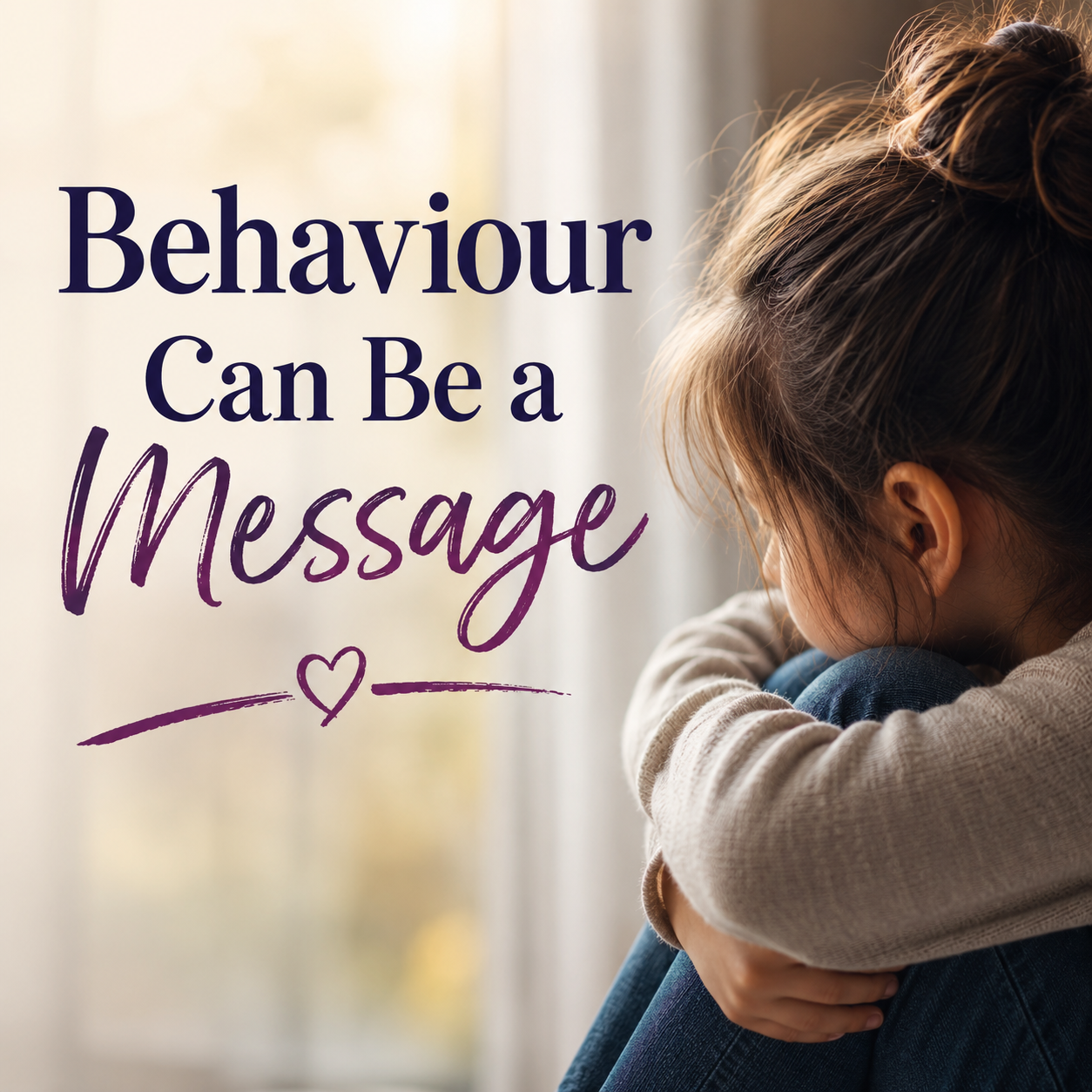
Children don’t always tell adults that they’re frightened. They may not understand that what’s happening at home is abuse. They may believe it’s normal, fear getting someone into trouble or worry that speaking will make the violence worse.
Some children disclose gradually. Others communicate through changes in mood, sleep, schoolwork, relationships or behaviour. A 2025 Australian Institute of Family Studies guide notes that disclosure is often a process rather than a single event, and that children are most likely to first speak to a trusted adult or peer. A child’s behaviour may therefore be part of a longer path toward being understood.
No single behaviour proves that domestic violence is occurring. Children can struggle for many reasons, including grief, disability, bullying, illness, developmental changes or other trauma. A trauma-informed response doesn’t diagnose a child from a distance. It remains curious, notices patterns and creates conditions in which the child feels safe enough to receive support.
The Same Fear Can Look Different
Age and development shape how distress appears. A young child may regress in sleep, language or toileting. A school-aged child may develop physical complaints, concentration problems or separation fears. A teenager may withdraw, take risks or avoid home.
These reactions aren’t a checklist, and they won’t affect every child equally. They remind us that support must fit the child, rather than forcing the child to fit an adult’s idea of trauma.
Some children respond to fear by becoming loud, angry or aggressive.
They may shout, hit, argue or react intensely to correction. Adults might see disrespect. Yet for a child taught that danger can arrive suddenly, aggression may feel like protection.
A disagreement or raised voice can feel like the beginning of something worse. The child’s reaction may seem disproportionate because they aren’t responding only to the present moment.
Trauma can affect a child’s ability to identify, express and regulate emotions. The National Child Traumatic Stress Network explains that children affected by complex trauma may internalise or externalise stress, with reactions including anxiety, anger, avoidance or explosive responses.
This doesn’t make aggression acceptable. Others still have a right to safety. But punishment without understanding can reinforce the child’s belief that adults are unpredictable and unsafe.

A better response combines firm boundaries with calm connection:
“I won’t let you hurt someone. You’re safe with me. We’ll work out what happened when you feel calmer.”
The Child Who Runs
Not every child fights. Some escape.
They may leave the classroom, avoid people, refuse school, hide or become distressed when they feel trapped.
Avoidance can look like laziness or non-compliance. It may be the child’s way of staying away from a person, sound, question or sensation associated with fear.
A slammed door, crowded hallway or unexpected change may activate a protective response. The child may only know they need to get away.
Cornering, shaming or demanding immediate explanations can intensify distress. Offering choice, physical space and a predictable way to return can reduce the sense of threat without abandoning expectations.
The Child Who Freezes
Some trauma responses in children are almost invisible.
A child may go silent, stare into space or struggle to follow instructions. They may appear indifferent when they’re actually overwhelmed.
Freezing can be mistaken for refusal. A teacher asks a question and the child doesn’t answer. An adult demands eye contact, but the child looks away.
What appears to be “not listening” may be a child whose attention has narrowed because their body is preparing for danger. Research summarised by ANROWS links domestic and family violence with an ongoing stress response that can affect children’s physical and psychological wellbeing. It also warns that some children show no obvious signs at first, with difficulties emerging later.
A quiet child isn’t necessarily an unaffected child.
Adults often notice the child who disrupts the room. We must also notice the child who disappears inside it.
The Child Who Keeps Everyone Happy
Another survival response can look like exceptional kindness, obedience or maturity.
This child watches faces, anticipates moods, avoids expressing needs and tries to prevent conflict.
They may be praised as “the easy one”.
But constant compliance can come from fear rather than confidence. The child may have learned that staying agreeable reduces tension and pleasing adults feels safer than risking anger.
They become skilled at reading everyone except themselves. They may not know what they want, feel or that they’re allowed to say no.
Kindness is a strength. It shouldn’t have to become a child’s safety plan.
The Child Who Becomes the Adult
In homes affected by domestic violence, some children take on responsibilities beyond their years.
They may care for siblings, comfort the abused parent, monitor danger or try to keep the household calm.
From the outside, they can seem capable and resilient. Inside, they may be carrying fear, guilt and responsibility that never belonged to them.
Adults sometimes celebrate this maturity without asking what required it. Competence can coexist with exhaustion.
Children need to hear that the violence wasn’t their fault, stopping it wasn’t their job and protecting the family was always an adult responsibility.
They also need opportunities to return to childhood, where play, rest, mistakes and dependence are safe.
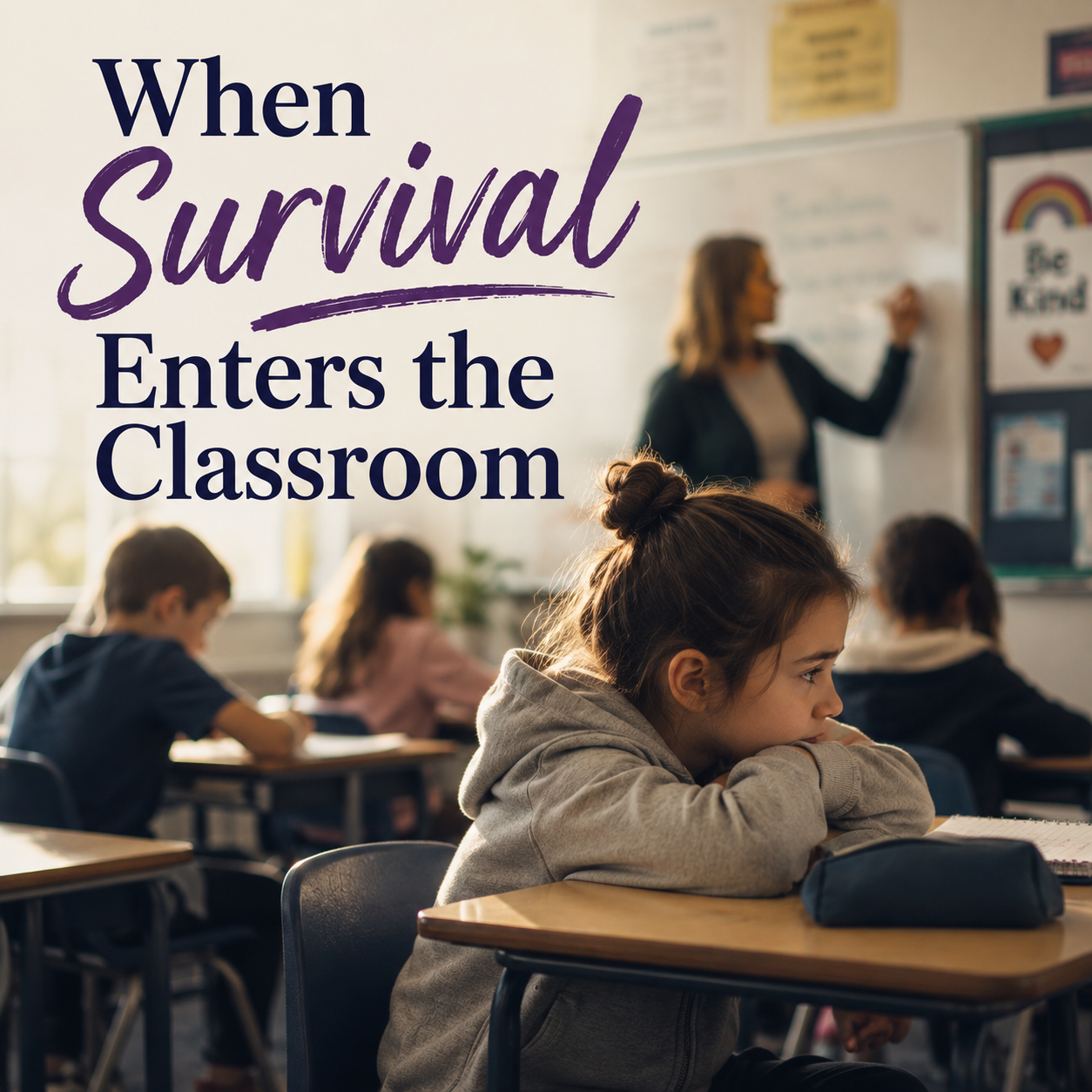
School may be the safest and most predictable place in a child’s life. It may also be where trauma-related behaviour is most visible.
Learning requires attention, memory and a reasonable expectation of safety. A child who spent the night listening for danger may arrive exhausted. Sudden noise may trigger panic and correction may feel threatening.
Australian research has associated children’s exposure to domestic and family violence with difficulties in behaviour, schooling, cognitive development and mental and physical wellbeing.
Trauma-informed education doesn’t mean lowering expectations. Predictable routines, calm transitions, private correction and trusted relationships can help children become regulated enough to learn.
The Australian Childhood Foundation describes trauma-informed schools as environments that build relational safety and develop consistent responses across school and home.
Sometimes the most important educational question isn’t:
“Why won’t this child learn?”
It’s:
“What does this child need to feel safe enough to learn?”
Safety Must Come Before Compliance
Traditional discipline often asks:
“What consequence will stop this behaviour?”
A trauma-informed approach also asks:
“What fear, need or trigger is driving it?”
This isn’t permissive parenting. Children need boundaries and accountability, delivered predictably and without intimidation.
A child who has experienced coercion doesn’t need more coercion disguised as discipline. Public shaming and power struggles repeat the dynamics that have already made adults feel unsafe.
Calm adults can show that authority doesn’t have to be dangerous.
Helpful responses include naming emotions without assuming the story, offering limited choices, explaining what happens next and reconnecting after conflict. This teaches that strong feelings can be survived without violence or shame.
A child can be held accountable without being humiliated.
A boundary can be firm without being frightening.
An adult can remain in control without needing to overpower the child.
Don’t Force the Story
When an adult suspects something is wrong, the urge to ask direct questions can be strong. But children shouldn’t be pressured to disclose or repeatedly questioned by untrained adults.
A safer response is to notice without accusing:
“You seem worried today.”
“I’ve noticed loud voices make you uncomfortable.”
“You can talk to me when you’re ready.”
When a child discloses, listen calmly. Believe them. Reassure them that they did the right thing.
Don’t promise secrecy, because information may need to be shared to keep them safe. Don’t investigate or ask leading questions. Record their words accurately and follow child protection requirements and organisational procedures.
The Australian Institute of Family Studies emphasises that the adult’s role is to support and listen, while trained authorities investigate.
Most importantly, don’t make the child responsible for what happens next.
Children Need More Than Individual Resilience
We often praise children for being resilient. Resilience matters, but it mustn’t become another way of expecting children to carry what adults and systems have failed to stop.
Children shouldn’t have to become stronger so violence can continue around them.
They need perpetrator accountability, safe housing, specialist support, stable schooling and services that see them as victim-survivors in their own right.
ANROWS has called for child-centred systems that recognise children’s diverse experiences, centre their voices and invest in trauma-informed domestic and family violence practice across services.
Protective relationships matter. Recent Australian Institute of Family Studies research identifies supportive social networks, child-safe environments and strong parent-child attachment as factors that can help prevent or reduce the effects of maltreatment.
Healing can begin when a child no longer has to scan every room for danger.
It grows through safety that is repeated, reliable and real.
See the Child, Not Just the Behaviour
A child’s behaviour may be inconvenient, confronting or difficult to manage. It may also be the clearest message they can give us.
The angry child may be frightened.
The controlling child may feel powerless.
The distracted child may be watching for danger.
The “perfect” child may be afraid to need anything.
The quiet child may be carrying a story no one has made safe enough to tell.
We won’t understand every behaviour immediately. But we can choose curiosity over judgement, connection over humiliation and safety over forced compliance.
A child is more than the hardest moment we see.
When behaviour may be a survival response, we stop asking only how to make it disappear. We ask what safety would look like and which adults will provide it.
That shift doesn’t remove accountability. It places responsibility where it belongs.
On adults.
On services.
On systems.
And on all of us who have the power to notice a child and respond with care.
#HealingThroughLove, #DomesticViolenceAwareness, #ChildTrauma, #TraumaInformedCare, #ChildSafety, #FamilyViolence, #ProtectChildren, #ChildrenAreVictimSurvivors